Water Softener Salt: Types, Pellets vs Crystals and How Much to Use
Last updated: November 6, 2026 · Based on manufacturer guidance and our water softener cost data
The best water softener salt for most homes is evaporated salt pellets, which are the purest type and leave the least residue in the brine tank. Solar salt crystals are a cheaper option that works well in most softeners. Rock salt is the cheapest but leaves sludge, and potassium chloride is a sodium-free alternative that costs several times more. Keep the brine tank at least a quarter full and check it once a month.
Walk into any hardware store and you will see pellets, crystals, “iron-out” salt, rock salt and potassium. This guide explains the types of water softener salt, pellets vs. crystals, how much salt to use and how to avoid common salt problems.
Types of Water Softener Salt

| Salt type | What it is | Pros | Cons |
|---|---|---|---|
| Evaporated salt pellets | Salt mined and purified by evaporation, pressed into pellets | Purest, least residue, fewer salt bridges | Costs a little more |
| Solar salt crystals | Sea water dried by the sun | Cheaper, dissolves well | More insoluble matter than pellets |
| Rock salt | Mined salt with minimal processing | Cheapest | Leaves sludge; tank needs cleaning more often |
| Potassium chloride | Sodium-free alternative | No added sodium | Costs several times more; may need a higher setting |
| Iron-fighting salt | Pellets with an additive to help with iron | Helps resin in water with some iron | Not a replacement for an iron filter |
Do not use table salt or de-icing salt. Table salt is too fine and can clog the system, and de-icing salt often contains additives.
Water Softener Pellets vs. Crystals
Both are sodium chloride. The difference is shape and purity:
- Pellets are evaporated salt pressed into uniform shapes. They are the best all-around choice for most single-tank softeners.
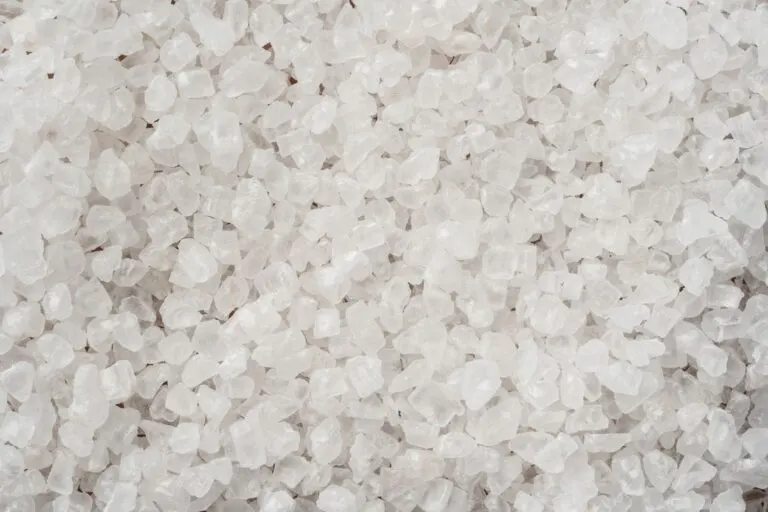
- Crystals (usually solar salt) are irregular chunks. Many manufacturers recommend them for two-part softeners and brine tanks that hold little water, because they are less likely to mush.
Your softener manual is the final word. If it does not say, pellets are a safe default.

How Much Salt Does a Water Softener Use?
It depends on your water hardness, how much water you use and how efficient your softener is. As a rough guide, many families of four use about one 40-pound bag a month. Metered (demand-initiated) softeners usually use less salt than older timer-based models. Our cost guide estimates salt at about $70 to $215 a year.
If you are using far more, the hardness setting may be too high. See our troubleshooting guide.
How to Add Salt to a Water Softener
- Check the level monthly. Keep the tank at least one-quarter to one-half full.
- Make sure the salt sits above the water line.
- Push a broom handle gently through the salt to check for a salt bridge (a hard crust with empty space below).
- Pour in the new salt without overfilling; leave a few inches below the lid.
- Do not let the tank run completely empty, or your water will turn hard until the next regeneration.

Common Salt Problems
- Salt bridge: a hard crust forms above the water, so no brine is made. Break it up carefully.
- Salt mushing: a sludge forms at the bottom of the tank and blocks brine flow. Clean out the tank and switch to higher-purity salt.
- Dirty brine tank: common with rock salt. Clean the tank about once a year.
Full steps are in our water softener maintenance guide.
Potassium Chloride vs. Salt
Potassium chloride replaces sodium with potassium, which is helpful for people on sodium-restricted diets. It works in most softeners, but it costs several times more than salt, and you may need to raise the softener’s salt setting slightly. If you only worry about sodium in drinking water, a reverse osmosis system at the kitchen tap can be a cheaper fix.
Do not have room for salt at all? Read about salt-free water softeners.
Frequently Asked Questions
Which salt is best for a water softener?
For most homes, evaporated salt pellets are the best choice because they are the purest and leave the least residue in the brine tank. Solar salt crystals are a good budget option. Avoid rock salt unless your manufacturer recommends it.
Are water softener pellets or crystals better?
Pellets work well in most modern softeners and are less likely to cause mushing. Crystals (solar salt) are often recommended for two-part softeners or brine tanks with little water. Check your softener manual.
How often should I add salt to my water softener?
Check it monthly and keep the tank at least one-quarter to one-half full, with the salt above the water line. Many families of four use about one 40-pound bag a month, but it depends on hardness and water use.
Can I mix different types of water softener salt?
It is generally fine to mix pellets and crystals, but mixing can increase the chance of salt bridges and mushing. It is best to let the tank run low before switching types. Do not mix rock salt in if you want a clean tank.
Can I use potassium chloride instead of salt?
Yes. Potassium chloride works in most softeners and adds potassium instead of sodium, which helps people on low-sodium diets. It costs several times more, and you may need to raise the softener setting slightly. Check your manual.
The Bottom Line
Use evaporated salt pellets for the cleanest, most trouble-free softener, or solar crystals to save money. Avoid rock salt and table salt. Keep the brine tank at least a quarter full, check for salt bridges once a month and switch to potassium chloride only if you need to cut sodium.