Water Softener Maintenance: Complete Guide and Schedule
Last updated: November 5, 2026 · Always follow your softener’s manual
Water softener maintenance is simple: check the salt level about once a month and top it up, break up any salt bridges, clean the brine tank about once a year, and test your water every few months to make sure it is still soft. With this routine, a salt-based softener usually lasts 10 to 15 years.
Most softener problems, like hard water coming back or salt that never seems to go down, are caused by skipped maintenance. This guide gives you a clear schedule, step-by-step instructions, and fixes for the most common problems.
Maintenance at a glance
- Monthly: check salt level; break up salt bridges
- Every 3 to 6 months: test water hardness; use resin cleaner if you have iron
- Once a year: clean the brine tank and the injector (venturi) and check settings
- Every 10 to 15 years: expect to replace the resin or the whole softener
Water Softener Maintenance Schedule
| How often | Task | Why it matters |
|---|---|---|
| Every month | Check the salt level and refill | No salt means no soft water |
| Every month | Look for a salt bridge | A crust can block the softener from making brine |
| Every 3–6 months | Test softened water hardness | Catches problems before you notice scale |
| Every 3–6 months | Use resin cleaner (if you have iron or manganese) | Iron fouls the resin and reduces capacity |
| Every 3–6 months | Replace pre-filters (if you have them) | Clogged filters lower water pressure |
| Once a year | Clean the brine tank | Removes sludge and residue from salt |
| Once a year | Clean the injector (venturi) and screen | A blocked injector stops brine from being drawn in |
| After a power outage | Check the clock and settings | Wrong time means regeneration at the wrong hour |
| Every 10–15 years | Replace resin or the softener | Resin slowly wears out |
How Often Should You Add Salt to a Water Softener?
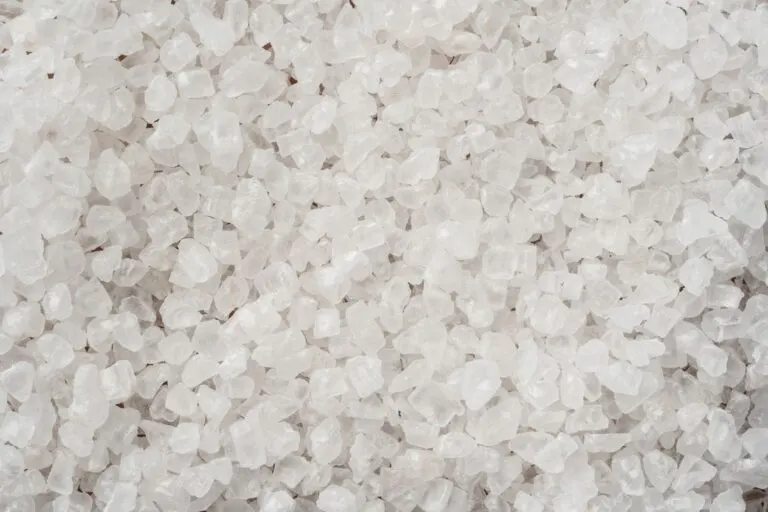
Most homes add salt every 4 to 8 weeks. How fast salt runs out depends on your water hardness, how much water your family uses, and the size and efficiency of your softener. A household of four with very hard water may need a bag every few weeks; a couple with moderately hard water may go two months or more.
Follow these simple rules:
- Check the salt level once a month.
- Keep the tank at least one-quarter full, and keep the salt a few inches above the water level.
- Don’t fill it to the very top. Many manufacturers suggest keeping it about half full to lower the risk of salt bridges.
- Wait until the salt drops before adding more, rather than topping up a little every week.
Which Salt Is Best for a Water Softener?
\n
For a full comparison, see our water softener salt guide.

| Salt type | Purity | Pros | Cons |
|---|---|---|---|
| Evaporated salt pellets | Highest | Least residue; best for most softeners | Costs a little more |
| Solar salt crystals | High | Good value; dissolves well | Slightly more residue |
| Rock salt | Lowest | Cheapest | Leaves sludge; more tank cleaning |
| Potassium chloride | High | No added sodium | Several times the price; may need a higher setting |
Never use table salt or rock salt meant for melting ice. They can contain additives that clog the softener. If you switch to potassium chloride, check your manual, since many softeners need a higher salt setting with it.
How to Fix a Salt Bridge

A salt bridge is a hard crust of salt that forms inside the brine tank, leaving an empty gap underneath. The salt above looks full, but it never touches the water, so the softener can’t make brine and your water slowly turns hard again. Humidity, the wrong type of salt and overfilling make bridges more likely.
Signs of a salt bridge
- The salt level hasn’t dropped in weeks, even though you use water normally
- Hard water symptoms are back, like spots and poor lather
- Pushing on the salt feels like a solid layer
How to break it up
- Put the softener in bypass.
- Take a broom handle or similar long pole and gently push it down through the salt in several spots.
- Break the crust into pieces. Don’t hit the tank walls hard, since you could crack the tank.
- Scoop out large chunks if needed, then run a manual regeneration.
If the salt has turned into a thick sludge at the bottom (called salt mushing), the tank needs a full clean.
How to Clean a Water Softener Brine Tank
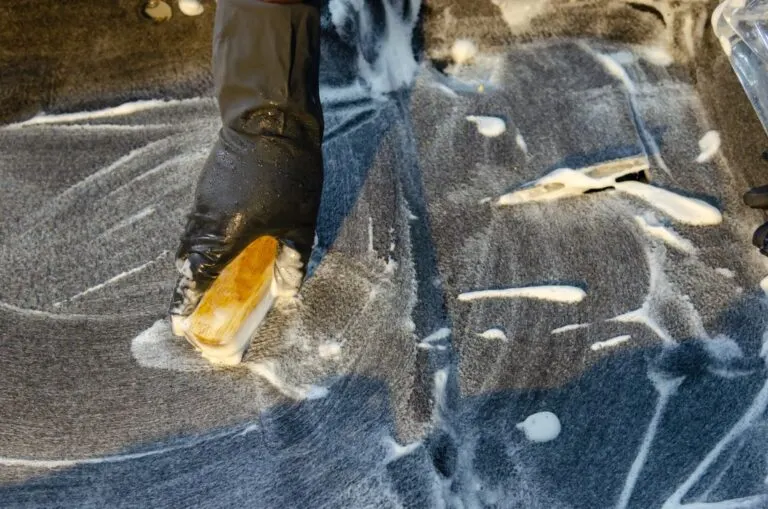
Clean the brine tank about once a year, or more often if you use rock salt. Plan this for when the salt level is low.
- Turn the softener to bypass and unplug it.
- Disconnect the brine line between the brine tank and the control valve.
- Remove the old salt and water. Scoop out salt and use a wet-dry vacuum or bucket for the water and sludge.
- Scrub the tank with warm water and a little dish soap, then rinse well.
- Sanitize if your manual allows it. Some manufacturers suggest a small amount of unscented household bleach in water; follow the exact amount in your manual and rinse thoroughly.
- Reconnect and refill. Add the water your manual specifies and fresh salt.
- Plug in, return to service and run a manual regeneration.
Never mix bleach with other cleaners, and never add bleach unless your softener’s manual says it is safe for your model.
How to Clean the Resin Bed
- The resin beads do the real work of softening, and they regenerate themselves with brine. But iron, manganese and sediment can coat them over time and reduce capacity. If your water has iron, add a softener resin cleaner to the brine well every 3 to 6 months, or as the product label says, and run a manual regeneration.
Chlorine in city water slowly breaks resin down. A carbon pre-filter can help it last longer. Resin usually lasts around 10 to 15 years; replacing it is cheaper than buying a new softener if the valve still works well.
Clean the Injector (Venturi) and Screen
The injector, also called the venturi, creates the suction that pulls brine into the resin tank. If it clogs, the softener can’t regenerate. Once a year, put the softener in bypass, release the pressure, remove the injector cap (see your manual for its location), and rinse the injector and small screen with warm water. A soft toothbrush helps. Reassemble carefully so the O-rings seal.
Troubleshooting Common Water Softener Problems
\n
Need more help? Read our full water softener troubleshooting guide.
| Problem | Likely cause | Fix |
|---|---|---|
| Hard water is back | No salt, salt bridge or wrong hardness setting | Refill salt, break bridge, retest and reset hardness |
| Salt level never drops | Salt bridge or clogged injector | Break the bridge; clean the injector |
| Brine tank full of water | Clogged injector, kinked drain line or float problem | Clean injector, check drain line, check brine float |
| Salty-tasting water | Interrupted regeneration or blocked drain | Check drain line; run a manual regeneration |
| Low water pressure | Clogged pre-filter or fouled resin | Replace filter; clean or replace resin |
| Softener runs constantly | Faulty valve or timer | Check settings; call a technician |
| Wrong regeneration time | Power outage reset the clock | Reset the time of day |
How to Test If Your Softener Is Working
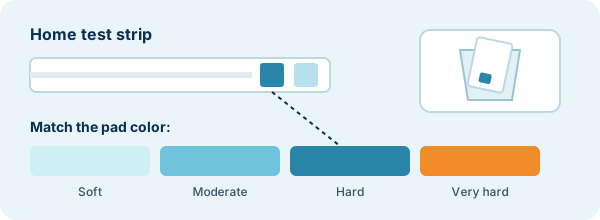
Every few months, test water from an indoor cold tap with a hardness test strip. Softened water should read close to 0 to 1 grain per gallon. If it reads higher, check the salt level and settings first. Our guide on how to test water hardness shows the easiest methods.
Water Softener Servicing: Signs It Needs Service or Replacement
- Hard water symptoms return even with plenty of salt and a clean tank
- Water tests hard right after a regeneration
- Resin beads show up in your faucets or toilet tank
- The control valve leaks, beeps with errors or won’t hold settings
- The softener is 10 to 15 years old and needs frequent repairs
If it’s time for a new one, see our guide to water softener cost and how to install a water softener.
Frequently Asked Questions
How often should I add salt to my water softener?
Most homes add salt every 4 to 8 weeks. Check the level once a month and keep the brine tank at least one-quarter full, with salt a few inches above the water line.
How often should a water softener be cleaned?
Clean the brine tank about once a year, or more often if you use rock salt or see sludge. Clean the injector once a year and use resin cleaner every 3 to 6 months if your water has iron.
What happens if a water softener runs out of salt?
Without salt, the softener can’t regenerate, so hard water flows straight through to your home. It won’t damage the softener, but refill the salt and run a manual regeneration to restore soft water.
How long does a water softener last?
A well-maintained salt-based softener usually lasts 10 to 15 years. Regular salt checks, yearly brine tank cleaning and resin cleaner for iron help it reach the longer end.
Can I use table salt in a water softener?
No. Table salt and ice-melting rock salt can contain additives that clog the softener. Use salt made for water softeners, ideally high-purity evaporated pellets.
The Bottom Line
Good water softener maintenance takes only a few minutes a month: check the salt, watch for salt bridges, test your water, and give the brine tank and injector a yearly clean. That keeps your water soft and your softener running for many years. Learn more in our complete guide to water softeners.