UV Water Filter: How UV Purifiers Work for Well Water
How UV water purifiers disinfect well water, what they need to work, how to size one and how to maintain it.

Pitchers, under-sink filters, reverse osmosis and whole-house systems, explained in plain English so you can match the right filter to what is actually in your water.

The best place to begin if you are choosing your first water filter.
Pitcher, faucet, under-sink, RO, whole-house and UV, compared side by side.
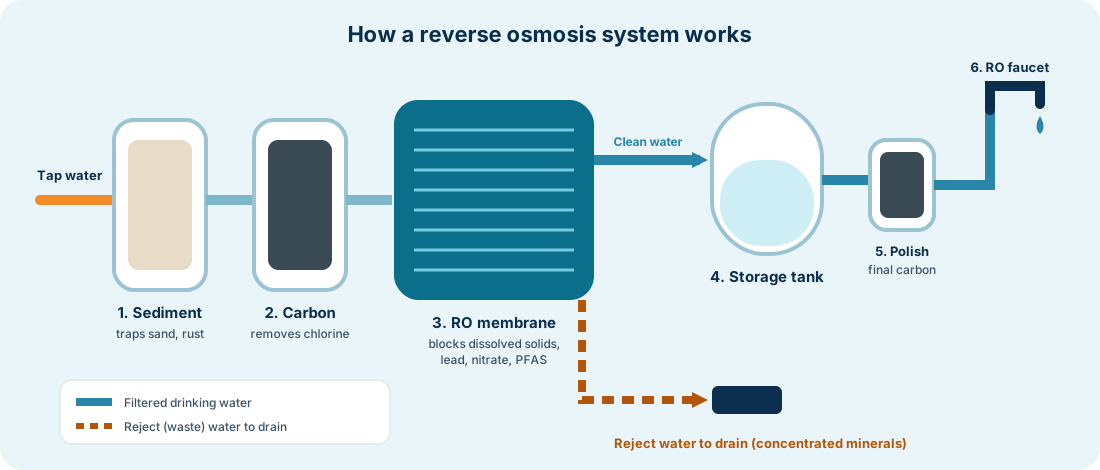
How RO works, what it removes, how much water it wastes and what it costs.
Tank sizes, the right air pressure and how to fix weak flow.
Types of iron, testing and the best filters.
Which methods work, which do not, and costs.
See how hard the water is where you live, with city data.
Salt-based or salt-free? Which one fixes your hard water.
Sizing, filter types and installation for point-of-entry systems.
Which filters work, and which certifications to trust.
Start with the problem, then pick the filter that solves it.
| Your problem | Best filter type | Where it works |
|---|---|---|
| Chlorine taste or smell | Carbon (pitcher, faucet, under-sink) | One tap |
| Lead | Filter certified to NSF/ANSI 53, or RO | One tap |
| PFAS, nitrate, arsenic, fluoride | Reverse osmosis | One tap |
| Sediment, chlorine in showers | Whole-house filter | Every tap |
| Bacteria in well water | UV purifier | Every tap |
| Scale, spots, dry skin | Water softener (not a filter) | Every tap |
Not sure what is in your water? Read your utility’s water quality report or test at home.
They solve different problems, and many homes need both.
 Water filter
Carbon, RO and other filters remove chlorine, lead, chemicals and particles. Most do not remove hardness minerals.
Compare filter types → Water softener
Softeners swap calcium and magnesium for sodium or potassium to stop scale in pipes, heaters and fixtures.
Explore water softeners →A filter is only as good as its tested claims. Look for certification from NSF, WQA, IAPMO, CSA Group or UL.
Learn more in our guide to types of water filters.
City water is treated to meet EPA standards, so a filter is often about taste rather than safety. Some homes still choose one for lead from old pipes, PFAS or chlorine taste. Check your annual water quality report first.
For drinking water, reverse osmosis removes the widest range of contaminants, including lead, nitrate, fluoride and PFAS. For whole-home problems, a whole-house filter matched to your water is best.
Most do not. Carbon filters leave calcium and magnesium in the water. Reverse osmosis removes hardness at one tap, and a water softener treats the whole home.
Follow the manufacturer’s schedule. An old filter can stop working or even release what it trapped. Pitcher filters often last about two months, and under-sink cartridges about six to twelve months.
Tell us what you are seeing at home and we may cover it in an upcoming guide.
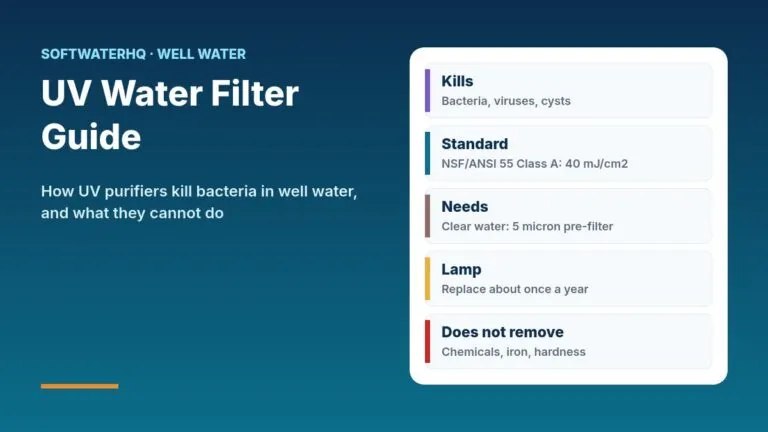
How UV water purifiers disinfect well water, what they need to work, how to size one and how to maintain it.
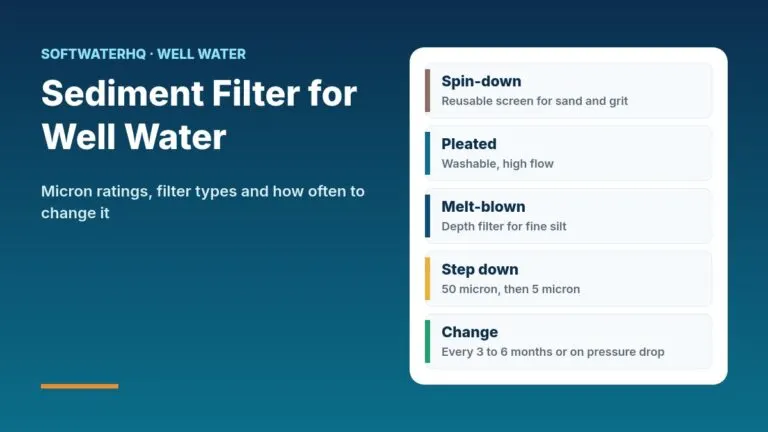
How to choose a sediment filter for well water: types, micron ratings, sizing, installation and replacement.
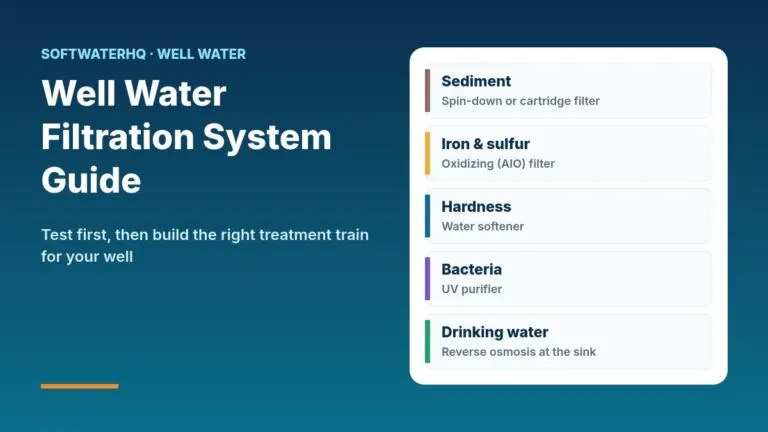
How to build the right well water filtration system: test first, match each problem to a treatment, and install the stages in the right order.

Which methods remove fluoride from tap water, which do not, what they cost and how to check the fluoride level in your water.

How to remove iron from well water: the types of iron, how to test, and the best and cheapest treatment options.

How a reverse osmosis tank works, which size you need, how to check and set RO tank pressure, and how to fix common problems.

Which water filters remove PFAS, how to check your water, what certified filters cost, and where EPA PFAS rules stand.

How whole house water filters work, the main types, what they cost installed, and how to choose the right system for your water.
Compare every type of home water filter, from pitchers to reverse osmosis and whole-house systems, and learn which one fits your water.

How reverse osmosis works, what it removes, how much water it wastes, what it costs and whether an RO system is right for your home.