Well Water Filtration System: How to Choose the Right Setup
Last updated: November 6, 2026 · Sources: U.S. EPA, CDC, NSF
The best well water filtration system is the one built around your water test. Start with a lab test for bacteria, nitrate, hardness, iron, manganese, pH and sulfur. Then add only the stages you need, usually in this order: a sediment filter, an iron and sulfur filter, a water softener, a carbon filter and a UV purifier, with reverse osmosis at the kitchen sink for drinking water.
About 43 million people in the U.S. get their water from private wells, and none of those wells are regulated by the EPA. That means you are the one in charge of your water quality. Well water can carry sand, iron, rotten-egg odor, hardness and bacteria, and one filter cannot fix all of it. This guide shows you how to test, which treatment fixes which problem, how to put the stages in the right order and what a full system costs to run.
Well water filtration at a glance
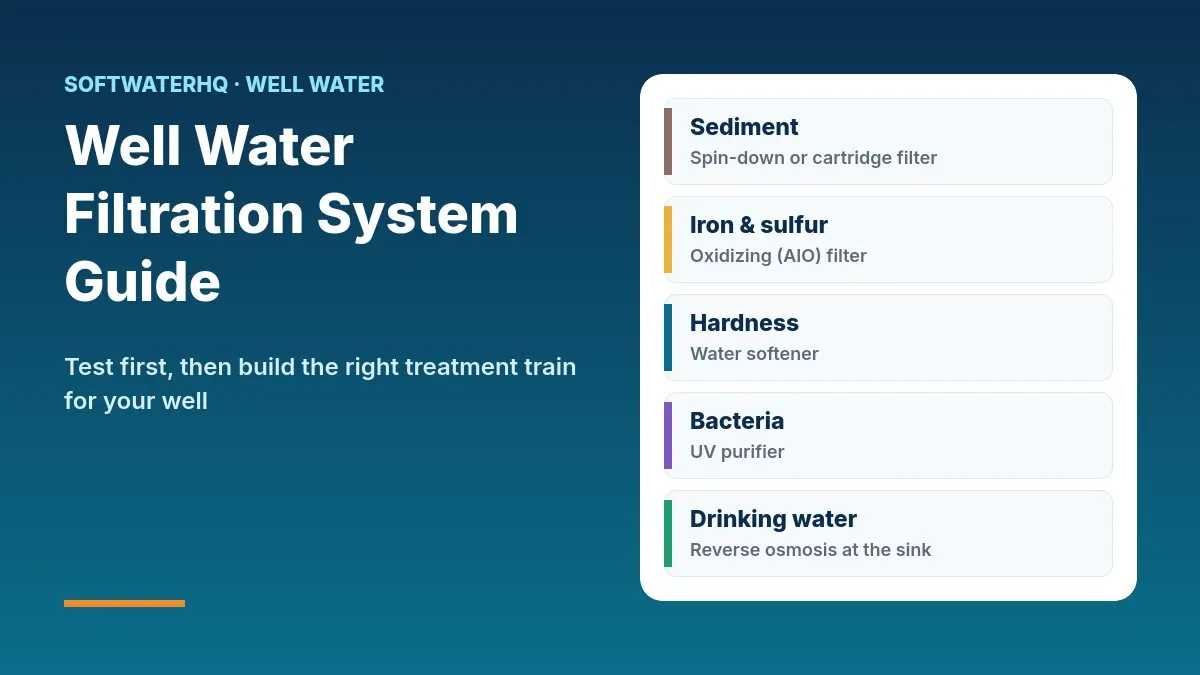
- Step 1: test your well with a state-certified lab
- Sand and grit: sediment filter
- Iron, manganese, sulfur smell: oxidizing filter such as air injection (AIO)
- Hard water: water softener
- Bacteria: UV purifier (after fixing the source)
- Nitrate, arsenic, PFAS: reverse osmosis or a certified specialty filter
Why Well Water Needs Its Own Filtration System
City water is treated and tested by a utility. Well water comes straight from the ground into your home, with no treatment and no required testing. What is in it depends on the local rock, how deep the well is, how well it was built and what happens on the land around it, such as farming, septic systems or old mines.
That is why two neighbors can have very different water. A well water filtration system has to be matched to your test results, not to a product box. Buying a “well water filter” without testing is the most common and most expensive mistake well owners make.
EPA estimates that more than 23 million households rely on private wells for drinking water in the United States.
Step 1: Test Your Well Water First
Use a state-certified lab, not just test strips, before you buy any equipment. At a minimum, test for:
- Total coliform and E. coli bacteria (safety)
- Nitrate (safety, especially for babies)
- Hardness, iron and manganese (sizing your softener and iron filter)
- pH and total dissolved solids (TDS)
- Hydrogen sulfide if you notice a rotten-egg smell
- Arsenic, uranium, lead or PFAS if they are common in your area or your home has older plumbing
Our well water testing guide explains what to test and when. Once you have results, enter them in our free water test results checker to see which numbers are above EPA limits.
Match Each Problem to the Right Treatment
| Problem | Common signs | Best treatment |
|---|---|---|
| Sediment (sand, silt, rust) | Gritty water, clogged aerators, cloudy water | Sediment filter or spin-down filter |
| Iron and manganese | Orange or black stains, metallic taste | Air injection (AIO) or other oxidizing filter; softener for low clear-water iron |
| Hydrogen sulfide | Rotten-egg smell | Carbon (low levels) or oxidizing filter; see sulfur smell fixes |
| Hardness | Scale, spotty dishes, soap scum | Water softener for well water |
| Low pH (acidic water) | Blue-green stains, pinhole leaks | Acid neutralizer (calcite) filter |
| Bacteria | Positive coliform test, illness | Shock chlorination, then a UV purifier |
| Nitrate, arsenic, PFAS, high TDS | Only a lab test will show them | Reverse osmosis for drinking water, or a certified specialty system |
| Tannins | Yellow or tea-colored water | Anion exchange (tannin) filter |
The Right Order for a Well Water Treatment System
Order matters because each stage protects the next one. Sediment clogs softener resin and shields bacteria from UV light. Iron fouls a softener and coats a UV sleeve. A typical whole-house setup, installed after the well’s pressure tank, looks like this:

- Sediment filter to catch sand, silt and rust.
- Acid neutralizer, only if your pH is below about 6.5. Calcite neutralizers add some hardness, so they go before the softener.
- Iron and sulfur filter for iron, manganese and hydrogen sulfide.
- Water softener for hardness and any leftover iron.
- Carbon filter to polish taste and odor, if needed.
- UV purifier last, so it gets the clearest possible water.
- Reverse osmosis at the kitchen sink for drinking and cooking water.
Whole-House vs. Point-of-Use Systems
Whole-house (point-of-entry) systems treat all the water that enters your home. You need them for problems that affect showers, laundry, plumbing and appliances, like sediment, iron, sulfur smell, hardness and bacteria. See our guide to whole house water filtration systems.
Point-of-use systems treat water at one tap, usually the kitchen sink. They are the most cost-effective way to handle contaminants that matter mainly for drinking, such as nitrate, arsenic, PFAS and lead. A reverse osmosis system under the sink is the usual choice.
Most well owners end up with both: whole-house treatment for the “nuisance” problems and RO for drinking water.
Types of Well Water Filtration Systems Explained
Sediment filters
The first line of defense. Spin-down screens catch sand; cartridge filters catch finer silt. Most homes do well with a step-down setup, such as 50 micron followed by 5 micron. See our full sediment filter guide.
Iron, manganese and sulfur filters
These filters oxidize dissolved iron, manganese and hydrogen sulfide so they turn into particles that a media bed can trap. Air injection oxidizing (AIO) filters use a pocket of air and no chemicals, which keeps running costs low. Greensand and catalytic media filters are other options. Very high levels may need chlorine or hydrogen peroxide injection. Learn more in how to remove iron from well water.
Water softeners
A softener removes calcium and magnesium through ion exchange and can also remove small amounts of clear-water iron. Well water changes how you size one, so read our water softener for well water guide before buying.
Acid neutralizers
Acidic well water (pH below 6.5) corrodes copper pipes and can leach lead and copper into your water. A calcite or calcite-blend neutralizer raises the pH as water flows through it.
Activated carbon filters
Carbon improves taste and odor, removes chlorine left over after shock chlorination and can reduce low levels of hydrogen sulfide and some organic chemicals.
UV purifiers
Ultraviolet light kills bacteria, viruses and cysts without chemicals. UV needs clear, low-iron water to work, which is why it comes last. See our UV water filter guide.
Reverse osmosis
RO pushes water through a very fine membrane and removes most dissolved contaminants, including nitrate, arsenic, fluoride, PFAS and TDS. It is usually installed under the kitchen sink. Read what is reverse osmosis to learn more.
Many of these stages are also used on city water. For pitcher, under-sink, reverse osmosis and whole-house options side by side, see our comparison of the types of water filters.
How Much Does a Well Water Filtration System Cost?
Costs depend on your water problems, home size and local labor rates. These are typical equipment ranges; professional installation adds to them.
| Stage | Typical equipment cost | Ongoing costs |
|---|---|---|
| Sediment filter | $50 to $300 | Cartridges every 3 to 6 months |
| Iron and sulfur (AIO) filter | $1,000 to $3,000 | Media every 5 to 10 years |
| Water softener | See our water softener cost guide | Salt and occasional resin cleaner |
| UV purifier | $300 to $1,200 | Lamp about once a year, electricity |
| Under-sink reverse osmosis | $200 to $800 | Filters yearly, membrane every 2 to 5 years |
A complete multi-stage system for a home with several problems often runs several thousand dollars installed. Testing first is how you avoid paying for stages you do not need.
Maintenance Checklist
| Component | Task | How often |
|---|---|---|
| Sediment filter | Replace cartridge or flush spin-down screen | Every 3 to 6 months, or when pressure drops |
| Iron/sulfur filter | Check backwash settings and air draw | Every few months |
| Water softener | Add salt, check hardness setting | Monthly |
| UV purifier | Replace lamp, clean quartz sleeve | Yearly |
| Reverse osmosis | Replace pre- and post-filters | Every 6 to 12 months |
| Well water | Lab test for bacteria and nitrate | Every year |
See our water softener maintenance guide for softener-specific steps.
Look for These Certifications
- NSF/ANSI 42: taste, odor and chlorine (aesthetic effects)
- NSF/ANSI 53: health-related contaminants such as lead and some chemicals
- NSF/ANSI 44: water softeners
- NSF/ANSI 55: UV systems (Class A for disinfection)
- NSF/ANSI 58: reverse osmosis systems
A certification only covers the contaminants listed on that product’s certificate, so check that your specific problem is on it.
Common Mistakes to Avoid
- Buying before testing. You may pay for stages you do not need and miss the one you do.
- Putting UV before the softener or iron filter. Iron and hardness coat the quartz sleeve and block the light.
- Ignoring your pump’s flow rate. Backwashing filters and softeners need a minimum flow. Check that your well can supply it.
- Skipping the sediment filter. Sand can ruin valves and resin quickly.
- Treating bacteria without finding the source. A cracked well cap or casing will keep letting bacteria in.
Frequently Asked Questions
What is the best filtration system for well water?
There is no single best system. The right setup depends on your water test. Most homes need a sediment filter plus treatment for their specific problems, such as an air injection filter for iron and sulfur, a softener for hardness and UV for bacteria, with reverse osmosis at the kitchen sink for drinking water.
Do I need a filtration system for my well water?
Not always, but every well should be tested at least once a year for bacteria and nitrate. If your test shows contaminants above EPA limits, or you notice stains, odors, sediment or hard water, a treatment system is worth installing.
What order should well water filters go in?
Install treatment after the pressure tank, usually in this order: sediment filter, acid neutralizer if needed, iron and sulfur filter, water softener, carbon filter and then UV purifier last. Reverse osmosis goes at the kitchen tap.
Will a whole house filter remove bacteria from well water?
Most whole-house filters do not kill bacteria. To disinfect well water, use a UV purifier certified to NSF/ANSI 55 Class A or a continuous chlorination system, and fix the source of contamination first.
How often should I test my well water?
Test for bacteria and nitrate at least once a year, and again after flooding, well repairs or any change in taste, color or smell. Test for other contaminants every few years or when you add treatment equipment.
Sources: EPA: Private Drinking Water Wells; CDC: Private Wells; NSF: Standards for Water Treatment Systems.