Types of Water Filters: Which One Do You Need?
Last updated: November 6, 2026 · Sources: EPA, NSF, Angi
The main types of home water filters are pitcher filters, faucet-mount filters, refrigerator filters, countertop filters, under-sink filters, reverse osmosis systems, whole-house filters and UV purifiers. Pitcher and faucet filters improve taste at one tap, reverse osmosis removes the widest range of contaminants, and whole-house filters treat every faucet in the home.
The right filter depends on what is in your water, where you need clean water and how much maintenance you want. This guide compares each type side by side so you can pick the one that fits your home, without paying for more than you need.
Quick picks
- Better taste on a budget: pitcher or faucet-mount carbon filter
- Lead, PFAS, nitrate or fluoride: under-sink reverse osmosis
- Chlorine or sediment in every tap: whole-house filter
- Bacteria in well water: UV purifier
- Hard water and scale: a water softener, not a filter
Types of Water Filtration Systems Compared
| Type | Where it works | Best for | Main downside |
|---|---|---|---|
| Pitcher | Fridge or counter | Taste, chlorine, some lead | Slow, small capacity |
| Faucet-mount | One kitchen tap | Taste, chlorine, lead (if certified) | Does not fit all faucets |
| Refrigerator | Fridge dispenser | Taste and chlorine | Limited contaminant removal |
| Countertop | Counter, connected to tap | Renters, more capacity | Takes counter space |
| Under-sink carbon | Kitchen sink | Taste, chlorine, lead, VOCs | Needs simple plumbing |
| Reverse osmosis | Kitchen sink | Lead, PFAS, nitrate, fluoride, TDS | Wastes water, slower |
| Whole-house | Main water line | Sediment, chlorine, every tap | Higher cost, installation |
| UV purifier | Main water line | Bacteria and viruses | Does not remove chemicals |
Point-of-Use vs. Point-of-Entry Filters
Every filter falls into one of two groups:
- Point-of-use (POU) filters treat water at one spot, usually for drinking and cooking. Pitchers, faucet filters, under-sink filters and RO systems are POU.
- Point-of-entry (POE) filters, also called whole-house filters, are installed where the main water line enters your home. They treat water for every tap, shower and appliance.
If your concern is drinking water, a POU filter is usually enough and costs much less. If the problem affects bathing, laundry or appliances, such as sediment, chlorine smell or iron stains, you need a POE system.
1. Pitcher Filters
Pitcher filters use a carbon cartridge to improve taste and reduce chlorine. Some are also certified to reduce lead and other contaminants. They are cheap, need no installation and are easy to use, which makes them the most popular starter filter.
Good for: small households, renters and anyone who mainly wants better-tasting water. Watch out for: small capacity, slow filtering and frequent cartridge changes.
2. Faucet-Mount Filters
These clip onto the end of your kitchen faucet and let you switch between filtered and unfiltered water. They filter on demand, so you never wait for a pitcher to refill.

Good for: families who drink a lot of tap water. Watch out for: they do not fit pull-down or some designer faucets, and they slow the flow.
3. Refrigerator Filters
Many refrigerators with water dispensers have a built-in carbon filter. They mainly improve taste and reduce chlorine. Check the certification, since some only cover taste and odor (NSF/ANSI 42).
4. Countertop Filters
Countertop filters sit next to the sink and connect to the faucet with a diverter, or are filled by hand. Some are gravity-fed, and some are countertop reverse osmosis units. They hold more than a pitcher and need no plumbing, so they are a good option for renters.
5. Under-Sink Filters
Under-sink filters connect to your cold water line and usually feed a separate faucet. Multi-stage carbon systems remove chlorine, many chemicals and, if certified, lead. They filter a lot of water quickly and the cartridges last longer than pitcher filters.
6. Reverse Osmosis Systems
Reverse osmosis pushes water through a very fine membrane that blocks most dissolved solids and many health-related contaminants, including lead, arsenic, nitrate, fluoride and PFAS. It is one of the most complete home filters, but it wastes some water and needs filter and membrane changes. Read our full guide: What is reverse osmosis?
7. Whole-House Filters
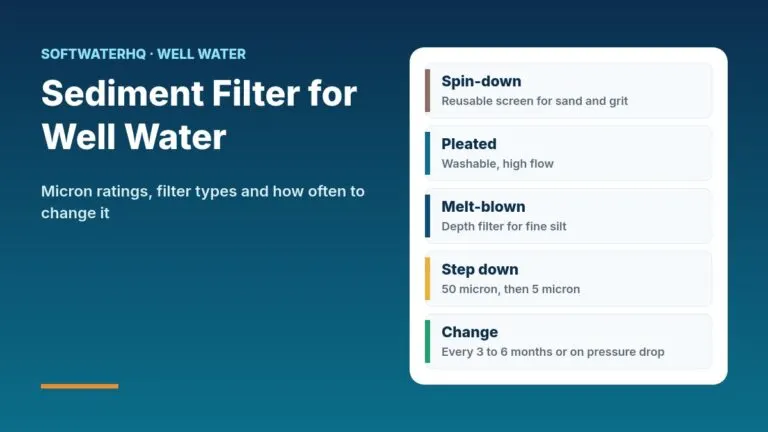
Whole-house filters treat all the water entering the home (see our full whole house water filtration system guide). Common types are sediment filters, carbon filters for chlorine and chloramine, and special filters for iron, sulfur or acidic well water.

According to Angi, whole-house filtration systems cost about $2,273 on average, with most homeowners paying between $1,129 and $3,540 installed. A whole-house carbon filter typically runs $800 to $1,500 installed.
8. UV Water Purifiers
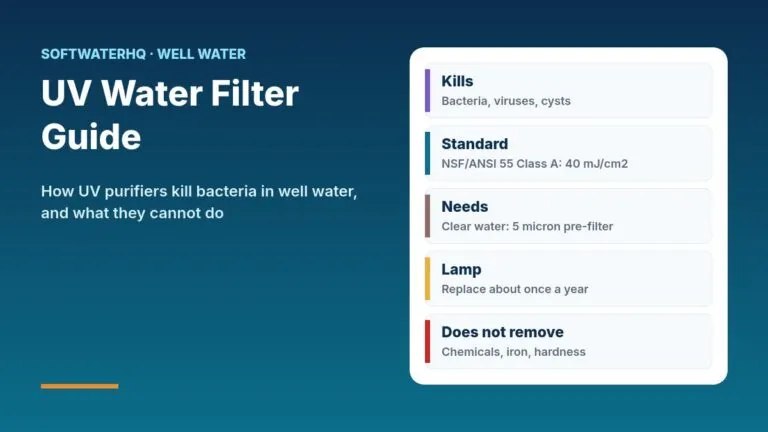
Ultraviolet (UV) systems use UV light to kill or inactivate bacteria, viruses and other microbes. They are common on private wells. UV does not remove chemicals, metals or sediment, so it is usually paired with a sediment filter before it. Angi puts UV systems at about $500 to $1,500 installed.
What About Hard Water?
Most water filters do not remove hardness. Hard water is caused by dissolved calcium and magnesium, and the standard fix for the whole home is a water softener, which uses ion exchange rather than filtration. Reverse osmosis removes hardness, but only at one tap. Learn more in what is hard water or see water hardness in your state.
Which Certifications Should You Look For?
A filter is only as good as its tested claims. Look for certification from an accredited body, such as NSF, WQA, IAPMO, CSA Group or UL, to these standards:
| Standard | What it covers |
|---|---|
| NSF/ANSI 42 | Taste and odor, chlorine, chloramine, particulates |
| NSF/ANSI 53 | Health contaminants such as lead, cysts, VOCs and PFOA/PFOS |
| NSF/ANSI 58 | Reverse osmosis systems |
| NSF/ANSI 401 | Emerging contaminants, such as some medications and pesticides |
| NSF/ANSI 55 | UV systems |
| NSF/ANSI 44 | Water softeners |
Always check that the certification covers the specific contaminant you want to remove, not just the brand name.
How to Choose the Right Water Filter
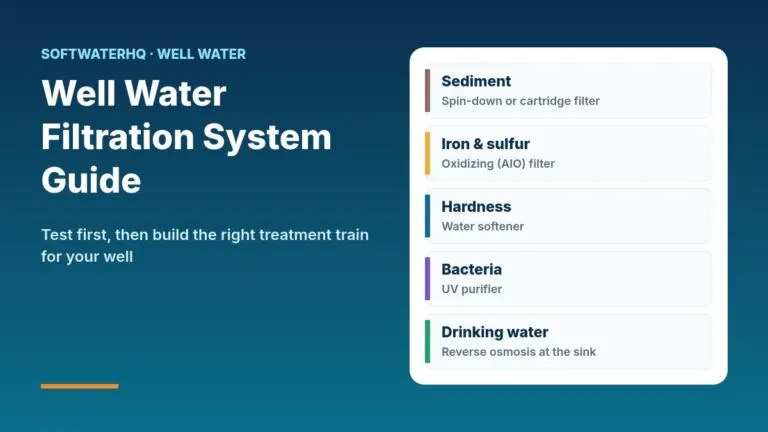
- Find out what is in your water. City water customers can read their annual Consumer Confidence Report. Well owners should test with a certified lab.
- Match the filter to the problem. Taste and chlorine need carbon. Lead, PFAS or nitrate point to RO or a certified NSF/ANSI 53 filter. Bacteria need UV.
- Decide where you need it. Drinking water only means point-of-use. Problems in showers and laundry mean whole-house.
- Check certification. Confirm the claim in the certifier’s online listing.
- Count the yearly cost. Replacement cartridges can cost more over time than the filter itself.
Comparing water treatment more broadly? See water softener vs. water conditioner.
Frequently Asked Questions
What is the best type of water filter for home use?
It depends on what is in your water. For better-tasting city water, a carbon pitcher, faucet or under-sink filter is often enough. For lead, nitrate, fluoride or PFAS, an under-sink reverse osmosis system is one of the most thorough options. For problems throughout the house, like sediment or chlorine, choose a whole-house filter.
Do water filters remove hard water?
Most carbon filters, including pitchers and refrigerator filters, do not remove hardness. Reverse osmosis removes it at one tap. To treat hard water for the whole home, you need a water softener.
What is the difference between point-of-use and point-of-entry filters?
Point-of-use filters treat water at one tap, such as a pitcher, faucet or under-sink filter. Point-of-entry, or whole-house, filters are installed where water enters your home and treat every faucet, shower and appliance.
How often should I change my water filter?
Follow the manufacturer’s schedule. Pitcher and faucet filters often last about two months, under-sink cartridges about six to twelve months, and RO membranes several years. The EPA notes that filters only work when they are maintained as directed.
What NSF certification should a water filter have?
Look for NSF/ANSI 42 for taste, odor and chlorine; NSF/ANSI 53 for health contaminants like lead; NSF/ANSI 58 for reverse osmosis; and NSF/ANSI 401 for emerging contaminants such as some medications and pesticides.
The Bottom Line
There is no single best water filter. A pitcher or faucet filter is fine for better taste. An under-sink reverse osmosis system is the best choice for removing a wide range of contaminants from drinking water. A whole-house filter makes sense when the problem shows up at every tap, and a water softener is the right fix for hard water. Test your water first, then buy a filter certified for what you actually need to remove.
Sources: NSF: NSF/ANSI 42, 53 and 401 filtration standards; EPA: Drinking water filters certified to reduce PFAS; Angi: Whole-house water filtration system cost; EPA: Consumer Confidence Reports.