Well Water Smells Like Sulfur (Rotten Eggs)? Causes and Fixes
Last updated: November 6, 2026 · Sources: U.S. EPA, USGS, university Extension guidance
Well water smells like sulfur or rotten eggs because of hydrogen sulfide gas. If the smell is only in your hot water, the cause is usually the water heater’s magnesium anode rod. If both hot and cold water smell, hydrogen sulfide is in the groundwater or sulfur bacteria are growing in the well. Low levels (under about 1 ppm) can be removed with a carbon filter; higher levels need an air injection or other oxidizing filter, and bacteria need shock chlorination.
A rotten-egg smell is one of the most common complaints from well owners. The smell is unpleasant, but at the levels usually found in wells it is a nuisance rather than a health risk, and it can almost always be fixed. The trick is finding the source first, because the fix for a water heater problem is very different from the fix for sulfur in the aquifer.
Sulfur smell in well water at a glance
- Cause: hydrogen sulfide (H₂S) gas
- Hot water only: water heater anode rod
- Hot and cold: sulfur in the groundwater or sulfur bacteria
- Under about 1 ppm: activated or catalytic carbon filter
- About 1 ppm and up: air injection (AIO) or other oxidizing filter
- Bacteria: shock chlorinate the well
Why Does My Well Water Smell Like Rotten Eggs?
The smell comes from hydrogen sulfide, a gas that people can smell at very low concentrations, well under 1 part per million (ppm). It gets into well water in three main ways:
- Naturally in groundwater, from decaying organic matter or sulfur-bearing rock and minerals.
- Sulfur-reducing bacteria living in the well, the pipes or a water heater. They turn sulfate in the water into hydrogen sulfide.
- A chemical reaction in the water heater, where the magnesium anode rod reacts with sulfate in the water.
Find the Source of the Smell
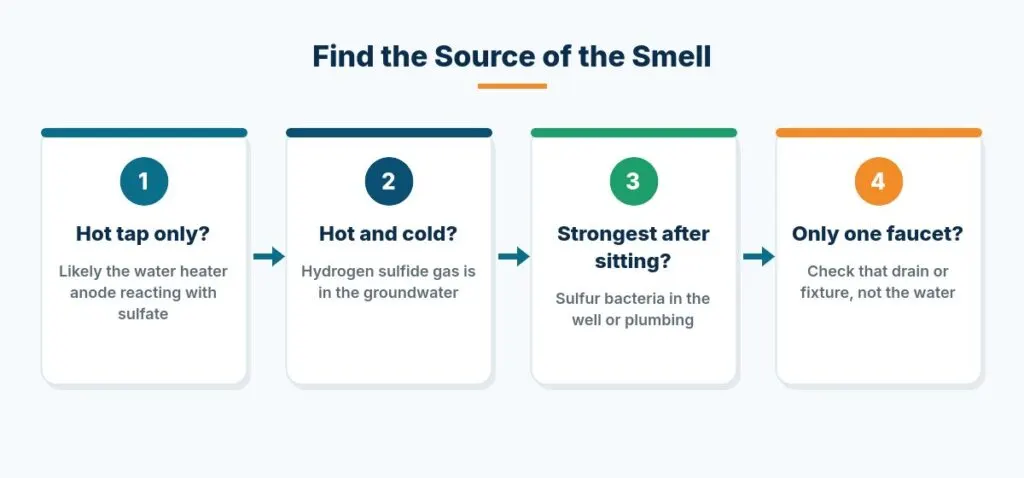
Run the cold water at a faucet you do not use often, then run the hot water, and compare. Also notice whether the smell is strongest first thing in the morning or after you have been away.
| What you notice | Most likely cause | Fix |
|---|---|---|
| Smell in hot water only | Water heater anode rod | Replace the anode; flush the heater |
| Smell in hot and cold water | Hydrogen sulfide in the groundwater | Carbon or oxidizing filter |
| Strongest after water sits, or slime in the toilet tank | Sulfur bacteria | Shock chlorination, then treatment if it returns |
| Only at one sink or tub | The drain, not the water | Clean the drain and trap |
| Only in softened water | Bacteria in the softener | Sanitize the softener and brine tank |
If Only Your Hot Water Smells: The Water Heater
Most tank water heaters have a magnesium anode rod that protects the tank from corrosion. In well water that contains sulfate, the magnesium can react and produce hydrogen sulfide, and bacteria in the warm tank make it worse. Options:
- Replace the anode with an aluminum/zinc anode or a powered (electric) anode, which are less likely to cause odor.
- Flush the tank to remove sediment where bacteria live.
- Do not simply remove the anode rod; that can shorten the heater’s life and may void the warranty. Check the manufacturer’s guidance, or have a plumber do it.
Water heaters are fitted with a magnesium rod to inhibit corrosion of the heater. The magnesium rod can chemically reduce sulfates to form hydrogen sulfide.
If Hot and Cold Water Smell: Sulfur in the Well
When both taps smell, the hydrogen sulfide is coming from the well. The amount can change with the seasons and with how much water you use. You will need to treat the water as it enters the home, after the pressure tank. Sulfur bacteria can also cause this; if the smell appeared suddenly, after work on the well or with slime buildup, try shock chlorinating the well first.
Is Sulfur Smell in Well Water Harmful?
At the levels typically found in household wells, hydrogen sulfide is mainly a nuisance. It tastes and smells bad, tarnishes silverware, blackens copper and brass, and corrodes pipes and fixtures. Very high concentrations of the gas are dangerous, so ventilate well pits and enclosed spaces.
Do not confuse hydrogen sulfide with sulfate, a dissolved mineral that does not smell like eggs but can have a laxative effect above about 250 mg/L. If your water smells and you have never tested it, also test for coliform bacteria, since a change in smell can come with other problems.
How to Test for Hydrogen Sulfide
Hydrogen sulfide is a gas, so it escapes from a water sample quickly. Ask a certified lab for its sampling instructions, or use a field test kit at the tap. Knowing the level helps you choose the right treatment, and it is worth testing for iron and manganese at the same time, since one filter can often handle all three. See our well water testing guide.
How to Get Rid of the Sulfur Smell
The right treatment depends mostly on the hydrogen sulfide level. Treat the ranges below as a rough guide, since manufacturers rate their equipment differently.
| Hydrogen sulfide level | Common treatment | Notes |
|---|---|---|
| Under about 1 ppm | Activated or catalytic carbon filter | Simple and low cost; carbon needs replacing |
| About 1 to 6 ppm | Air injection oxidizing (AIO) filter, or manganese greensand or catalytic media | Also removes iron and manganese; backwashes automatically |
| Above about 6 ppm | Chlorine or hydrogen peroxide injection followed by a carbon filter | Handles the highest levels and bacteria; more maintenance |
| Caused by sulfur bacteria | Shock chlorination; continuous treatment if it returns | Fix the bacteria first or filters will foul |
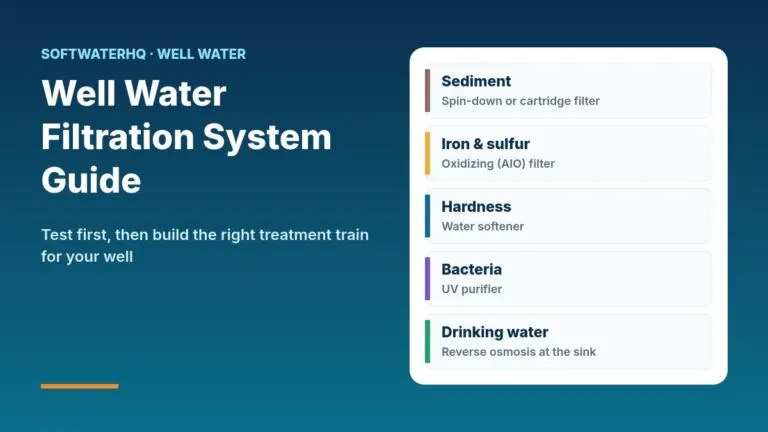
For how these filters fit with a softener and UV, see our well water filtration system guide. Iron and sulfur often show up together; our iron removal guide covers the same oxidizing filters.
Does a Water Softener Remove Sulfur Smell?
Not reliably. A water softener is designed to remove hardness, not gases. Hydrogen sulfide can also foul softener resin over time. Treat the sulfur with a carbon or oxidizing filter installed before the softener. If the smell appears only in softened water, sanitize the softener and brine tank, which can harbor bacteria. Learn more in water softeners for well water.
Frequently Asked Questions
Is it safe to drink well water that smells like sulfur?
At the low levels usually found in household wells, hydrogen sulfide is generally a nuisance rather than a health risk, though it tastes unpleasant. Because a new smell can come with other problems, test your well for bacteria and other contaminants to be sure.
Why does my hot water smell like rotten eggs but not my cold water?
The water heater’s magnesium anode rod is reacting with sulfate in the water, often helped by bacteria in the tank. Replacing it with an aluminum/zinc or powered anode and flushing the tank usually fixes the problem.
Will shocking my well get rid of the sulfur smell?
If sulfur bacteria are causing the smell, shock chlorination can clear it, at least for a while. If the hydrogen sulfide comes naturally from the groundwater, the smell will return and you will need a filter.
What is the best filter for sulfur smell in well water?
For low levels, a catalytic or activated carbon filter works. For moderate levels, an air injection oxidizing (AIO) filter is a popular choice because it also removes iron and uses no chemicals. Very high levels need chlorine or hydrogen peroxide injection.
Why does my well water smell like sulfur all of a sudden?
A sudden smell often means sulfur bacteria have grown in the well, pipes or water heater, especially after work on the well or a period of low use. Changes in the groundwater can also cause it. Test the water and try shock chlorination.
Sources: EPA: Secondary Drinking Water Standards; EPA: Private Drinking Water Wells.