How to Shock a Well: Step-by-Step Shock Chlorination Guide
Last updated: November 6, 2026 · Sources: CDC, U.S. EPA, university Extension guidance
To shock a well, bypass your water treatment equipment, mix plain unscented bleach into the well (roughly 2 to 3 pints of bleach per 100 gallons of water in the well), circulate it with a garden hose until every tap smells of chlorine, let it sit for 12 to 24 hours, then flush the water outdoors until the smell is gone. Retest for bacteria 7 to 14 days later.
Shock chlorination is the standard way to disinfect a private well after a positive bacteria test, a repair, a flood or a new pump. It is a job most homeowners can do in a weekend with supplies from a hardware store. This guide walks through when to shock a well, how much bleach to use and how to do it safely.
Shocking a well at a glance
- Use: plain, unscented household bleach (6% to 8.25%) or chlorine products made for wells
- Target: roughly 100 to 200 ppm chlorine in the well
- Contact time: 12 to 24 hours
- Flush: outdoors, away from the septic system, gardens and streams
- Retest: for coliform bacteria 7 to 14 days after the chlorine is gone
What Is Shock Chlorination?
Shock chlorination means adding a high dose of chlorine to a well and the home’s plumbing for a short time to kill bacteria. It is a one-time disinfection, not ongoing treatment. It works well when bacteria got in during a single event, such as a pump repair or a flood. It does not fix a well that keeps letting contamination in.
When done properly, shock chlorination will kill all the bacteria existing in a well.
When Should You Shock Your Well?
- Your water tested positive for coliform bacteria
- After a new well is drilled or an old one is repaired
- After the pump, pipe or pressure tank is replaced
- After flood water covered or reached the wellhead
- When iron or sulfur bacteria cause slime or a rotten-egg smell
- When a well has not been used for a long time
When Shocking Is Not Enough
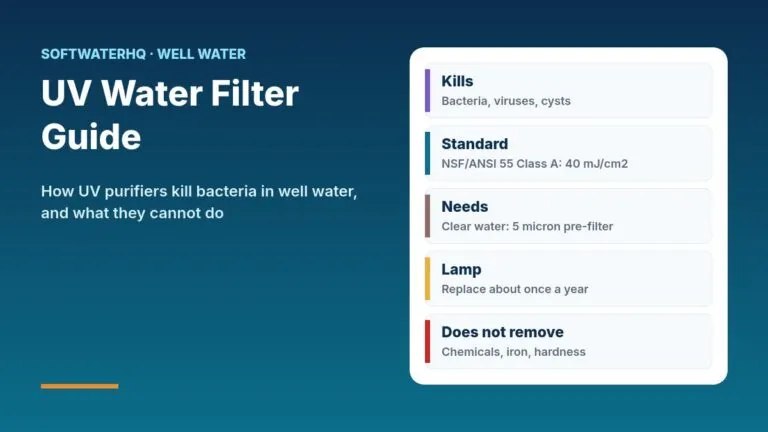
If bacteria come back after one or two shock treatments, something is letting contamination in. Common causes are a loose or cracked well cap, a damaged casing, a missing seal, surface water pooling around the well or a septic system that is too close. Call a licensed well contractor to inspect it. If the problem cannot be fixed, continuous disinfection with a UV purifier or a chlorination system is the long-term answer.
If your water tested positive for E. coli, use bottled or boiled water for drinking until follow-up tests are clear, and contact your local health department.
What You Need
- Chlorine: plain, unscented household bleach. Avoid scented, “splash-less” or color-safe bleach, which contain additives. Chlorine tablets or granules sold for well disinfection are another option; follow the label.
- A garden hose that reaches from an outdoor spigot to the well
- Rubber gloves and safety goggles
- A clean bucket for mixing
- Chlorine test strips (pool or spa strips work) to confirm the chlorine is flushed out
- Bottled water for drinking while the system is chlorinated
How Much Bleach to Use
First, work out how many gallons of water are in your well:
Gallons in well = feet of water in the well × gallons per foot
| Well casing diameter | Gallons per foot of water |
|---|---|
| 4 inches | 0.65 |
| 6 inches | 1.47 |
| 8 inches | 2.61 |
“Feet of water” is the total well depth minus the depth to the water level. You can find both on your well log or well completion report, often available from your state or county.
Then add bleach at roughly this rate for about 200 ppm of chlorine:
- 8.25% bleach: about 2 pints per 100 gallons of well water
- 6% bleach: about 2.7 pints per 100 gallons of well water
Example: a 6-inch well with 150 feet of water holds about 150 × 1.47 = 220 gallons. With 8.25% bleach, that is about 2.2 × 2 = 4.4 pints, or a little over half a gallon. Add a little extra for the water in the pressure tank and pipes.
More is not better. Very high chlorine levels raise the water’s pH, which can actually make chlorine less effective, and they are harder to flush out.
How to Shock a Well: Step by Step

- Prepare. Store enough bottled water for 1 to 2 days. Put your water softener, carbon filters, reverse osmosis system and UV purifier into bypass so chlorine does not damage them. If your water heater has a sediment problem, you can drain it first.
- Turn off power to the pump at the breaker, then open the well cap. On some wells you need to remove a vent plug or a bolted cap. Be careful with wiring.
- Add the bleach. Dilute it in a few gallons of water in a bucket and pour it into the well, trying to wet the inside of the casing.
- Circulate. Turn the pump back on. Connect a garden hose to the nearest outdoor spigot, put the other end into the well and run it until you smell chlorine coming out of the hose. This mixes the chlorine and washes down the casing walls. Then close the well cap.
- Chlorinate the plumbing. Open every faucet in the house, hot and cold, one at a time, plus showers, outdoor spigots and toilets, until you smell chlorine at each. Then shut them off.
- Wait. Let the chlorinated water sit in the well and pipes for 12 to 24 hours. Do not drink it, and avoid using it for bathing during this time.
- Flush. Run water from an outdoor hose, away from your septic field, lawn, garden and any stream, until you can no longer smell chlorine. Then run the indoor taps briefly. Use chlorine test strips to confirm the chlorine is gone.
- Return your equipment to service and replace any carbon filter cartridges that were exposed to chlorine.
Flushing Safely
Large amounts of chlorinated water can harm a septic system’s bacteria, kill plants and hurt fish. Flush most of the water through an outdoor hose onto a gravel driveway or an area away from wells, septic fields and surface water. Flush in stages if needed so you do not pump the well dry. Some states have rules about where chlorinated water can be discharged, so check local guidance.
Retest Your Water
Wait until all the chlorine is flushed out, then retest for total coliform and E. coli with a certified lab, usually 7 to 14 days later. Testing too soon can give a false “clear” result while chlorine is still in the water. If the result is still positive, have the well inspected. See our well water testing guide for how to collect a sample.
Safety Tips
- Never mix bleach with ammonia, vinegar or other cleaners. It can release toxic gas.
- Wear goggles and gloves, and keep children and pets away from the well.
- Ventilate well pits and enclosed spaces; do not climb into a well pit.
- If you are not comfortable working with the well cap or wiring, hire a licensed well contractor.
Frequently Asked Questions
How much bleach do I need to shock a well?
For about 200 ppm of chlorine, use roughly 2 pints of 8.25% bleach or 2.7 pints of 6% bleach per 100 gallons of water in the well. Multiply the feet of water in your well by 1.47 gallons for a 6-inch well, or 0.65 gallons for a 4-inch well, to find the gallons.
How long after shocking a well can you drink the water?
Do not drink the water until the chlorine has been flushed out and a follow-up bacteria test, usually 7 to 14 days later, comes back negative. Use bottled water until then.
How often should you shock your well?
Only when needed: after a positive bacteria test, well or pump work, flooding or a long period without use. If you need to shock the well repeatedly, find and fix the source of contamination instead.
Can I shock my well with a water softener installed?
Put the softener in bypass first. Chlorine at shock levels can damage softener resin, and you do not want to send chlorinated water through it. The same goes for carbon filters, reverse osmosis and UV systems.
Will shocking a well get rid of the rotten egg smell?
It can, if the smell comes from sulfur bacteria in the well. If the smell returns after a few weeks, or it comes from hydrogen sulfide in the groundwater, you will need ongoing treatment such as an air injection filter.
Sources: EPA: Private Drinking Water Wells; CDC: Private Wells.