What Is TDS in Water? Good Levels, Testing and How to Lower It
Last updated: November 6, 2026 · Sources: EPA, World Health Organization
TDS stands for total dissolved solids: the total amount of minerals, salts and other substances dissolved in water, measured in milligrams per liter (mg/L) or parts per million (ppm). Most of it is harmless calcium, magnesium, sodium and bicarbonate. The EPA recommends drinking water stay under 500 mg/L of TDS for taste, and the World Health Organization rates under 300 mg/L as excellent.
TDS is one of the most misunderstood water numbers. A cheap TDS meter can give you a quick reading, but it does not tell you whether your water is safe. This guide explains what TDS in water means, what a good TDS level is, how to test it and how to lower it if you want to.
TDS in water at a glance
- Meaning: total dissolved solids, in mg/L or ppm
- EPA guideline: 500 mg/L (secondary standard for taste and appearance)
- Excellent taste: under 300 mg/L (WHO)
- Test it with: a TDS meter (quick) or a lab test (detailed)
- Lower it with: reverse osmosis or distillation
Already have results? Enter them in our free water test results checker to compare them with EPA limits.
What Is TDS in Water?
As water moves through soil, rock and pipes, it dissolves small amounts of whatever it touches. TDS is the sum of all of it. Typical components are:
- Calcium and magnesium (which also cause hard water)
- Sodium, potassium and chloride
- Bicarbonates, sulfates and nitrates
- Small amounts of other minerals and, sometimes, contaminants
What Is a Good TDS Level for Drinking Water?

| TDS (mg/L) | Taste rating (WHO) |
|---|---|
| Under 300 | Excellent |
| 300 to 600 | Good |
| 600 to 900 | Fair |
| 900 to 1,200 | Poor |
| Over 1,200 | Unacceptable |
Very low TDS water, such as reverse osmosis or distilled water, is safe to drink. Some people find it tastes flat, which is why some RO systems add a remineralization stage.
Is High TDS Water Bad for You?
Usually not. High TDS mostly means more minerals, which affects taste and can cause scale on fixtures and appliances. But TDS is a general indicator: a sudden rise, or very high readings, is a good reason to test for specific contaminants like nitrate, sodium or sulfate. Read your water quality report or, for wells, follow our well water testing guide.
How to Test TDS in Water
- Use a TDS meter. Dip the tip in a glass of water, wait a few seconds and read the number in ppm. Rinse the meter after use.
- Compare taps. Test before and after a filter to see how well it reduces TDS. This is the most useful way to check an RO system.
- Get a lab test if you need to know what makes up the TDS, or if you have a private well.

TDS Meter Limitations
A TDS meter measures electrical conductivity and converts it into an estimate. It cannot:
- Detect lead, arsenic or other metals at harmful levels
- Detect bacteria or viruses
- Detect PFAS, pesticides or most organic chemicals
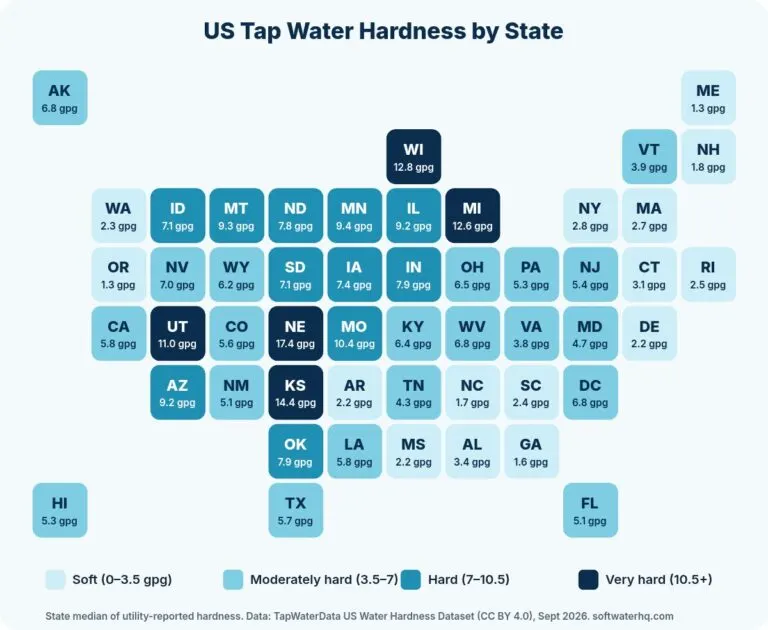
- Tell you your water hardness exactly (use a hardness test for that)
So a low TDS reading does not prove water is safe, and a high reading does not prove it is unsafe.
How to Reduce TDS in Water
| Method | Reduces TDS? | Notes |
|---|---|---|
| Reverse osmosis | Yes, greatly | The most practical home option |
| Distillation | Yes | Slow and uses electricity |
| Deionization | Yes | Mostly used in labs and aquariums |
| Carbon filter | Very little | Improves taste and chlorine, not TDS |
| Water softener | No | Swaps minerals for sodium; TDS stays about the same |

Frequently Asked Questions
What is a good TDS level for drinking water?
Under about 300 mg/L is considered excellent for taste by the World Health Organization, and the EPA recommends staying under 500 mg/L. Most US tap water falls in a comfortable range. Very low TDS, like reverse osmosis water, is also safe to drink.
Is high TDS water harmful?
Not by itself. TDS measures all dissolved solids, mostly harmless minerals like calcium, magnesium and sodium. High TDS mainly affects taste and can cause scale. But a high reading can be a sign to test for specific contaminants.
Does a TDS meter show if water is safe?
No. A TDS meter only measures electrical conductivity, which estimates dissolved minerals and salts. It cannot detect lead, bacteria, PFAS, pesticides or many other contaminants. Use a certified lab test for safety.
How do I reduce TDS in my water?
Reverse osmosis is the most effective home method and typically removes most dissolved solids. Distillation and deionization also lower TDS. Carbon filters and water softeners do not lower TDS much.
Does a water softener reduce TDS?
No. A water softener swaps calcium and magnesium for sodium or potassium, so the total dissolved solids stay about the same or rise slightly. To reduce TDS, use reverse osmosis.
The Bottom Line
TDS in water is the total amount of dissolved minerals and salts. Under 300 mg/L tastes excellent, and the EPA guideline is 500 mg/L. A TDS meter is great for checking an RO filter, but it is not a safety test. If you want lower TDS, reverse osmosis is the best home option.
Sources: EPA: Secondary drinking water standards; World Health Organization: Water, sanitation and health.