UV Water Filter: How UV Purifiers Work for Well Water
Last updated: November 6, 2026 · Sources: U.S. EPA, NSF, CDC
A UV water filter (more accurately, a UV water purifier) disinfects water by passing it under ultraviolet light, which damages the DNA of bacteria, viruses and cysts so they cannot multiply. It is a popular, chemical-free way to protect well water. UV does not remove chemicals, iron, hardness or sediment, so it needs clear, pre-filtered water and should be the last stage of treatment.
If your well has ever tested positive for bacteria, or it is shallow, near a septic system or prone to flooding, a UV system gives you round-the-clock protection without adding chlorine taste. This guide explains how UV purifiers work, what they need to work properly, how to size one and how to maintain it.
UV water filters at a glance
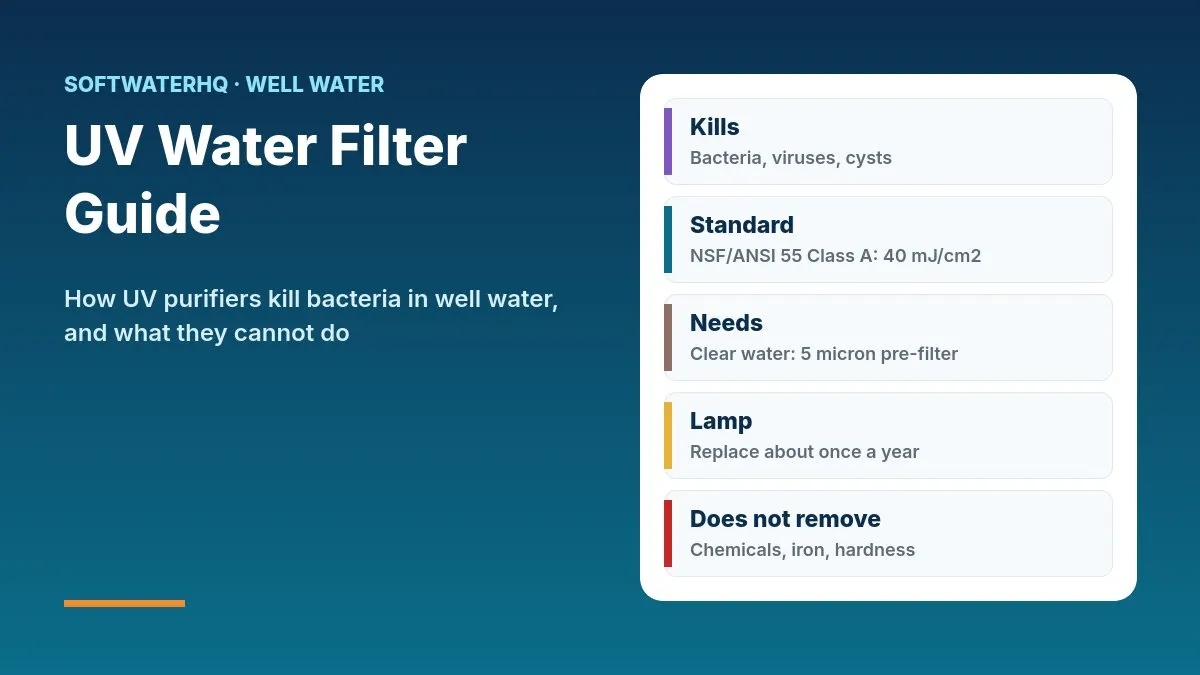
- Kills: bacteria (including E. coli), viruses and protozoa such as Giardia
- Does not remove: chemicals, metals, nitrate, iron, hardness or sediment
- Standard to look for: NSF/ANSI 55 Class A (40 mJ/cm²)
- Needs: clear water; a 5-micron sediment filter before it
- Maintenance: replace the lamp about once a year; clean the quartz sleeve
What Is a UV Water Filter?
A UV water filter is a stainless steel chamber with an ultraviolet lamp inside a clear quartz sleeve. Water flows through the chamber around the sleeve. It is not really a filter, because nothing is removed from the water. Instead, the UV-C light inactivates microorganisms as they pass by. Whole-house units are installed on the main water line; smaller units can protect a single tap or a reverse osmosis system.
How a UV Purifier Works

UV-C light at a wavelength of about 254 nanometers damages the genetic material of microbes. They are not always killed instantly, but they can no longer reproduce, so they cannot cause infection. The strength of this treatment is called the UV dose, measured in millijoules per square centimeter (mJ/cm²). The dose depends on lamp power, how long the water stays in the chamber (flow rate) and how clear the water is.
What UV Treats and What It Does Not
| UV is effective against | UV does not treat |
|---|---|
| Coliform bacteria and E. coli | Nitrate and nitrite |
| Viruses | Lead, arsenic and other metals |
| Giardia and Cryptosporidium | PFAS and other chemicals |
| Most other waterborne pathogens | Iron, manganese, hardness, sediment, odor |
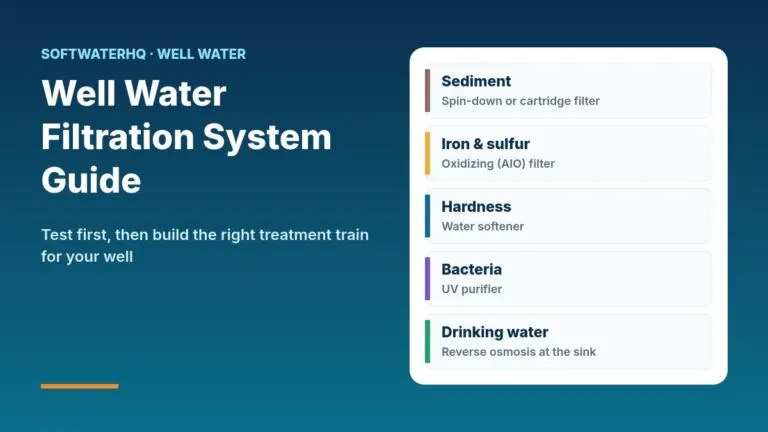
For chemical contaminants, pair UV with reverse osmosis or another certified filter. See how the stages fit together in our well water filtration system guide.
Do You Need a UV Water Filter?
A UV system is worth considering if:
- Your well has tested positive for coliform bacteria, especially more than once
- You have a shallow, dug or older well
- Your well is near a septic system, livestock or a stream
- Your area floods, or the water changes after heavy rain
- Someone in your home has a weakened immune system
UV is not a substitute for fixing a damaged well. Repair the source of contamination and shock chlorinate the well first, then use UV for ongoing protection. Most homes on treated city water do not need UV.
Water Quality UV Needs to Work
Anything that blocks or absorbs light reduces the UV dose. Particles can also shield microbes from the light, and minerals coat the quartz sleeve. Most manufacturers list water quality limits similar to these:
| Water quality | Typical maximum | Treatment if higher |
|---|---|---|
| Sediment / turbidity | Under 1 NTU | 5-micron sediment filter |
| Hardness | About 7 GPG | Water softener |
| Iron | 0.3 mg/L | Iron filter |
| Manganese | 0.05 mg/L | Oxidizing filter |
| UV transmittance (UVT) | 75% or higher | Pre-treatment; tannin filter if water is tea-colored |
Check the limits for the specific model you buy, and test your water before installing.
NSF/ANSI 55: Class A vs. Class B
- Class A systems deliver at least 40 mJ/cm² and are designed to disinfect water that may contain harmful bacteria and viruses. This is the class to choose for well water.
- Class B systems deliver at least 16 mJ/cm² and are meant only as supplemental treatment for water that is already considered safe. They are not designed for contaminated water.
Look for a UV system with a UV intensity sensor and an alarm that warns you when the lamp fails or the dose drops.
How to Size a UV System
UV systems are rated by flow in gallons per minute (GPM) at a given dose. Choose a unit rated for your home’s peak flow, not its average use. Many homes need 8 to 15 GPM. If your water’s UV transmittance is lower than the rating assumes, choose a larger unit. A system that is too small lets water pass through too fast to get a full dose.
Installation Tips
- Install UV as the last stage of whole-house treatment, after sediment filters, iron filters and softeners.
- Place it close to where water enters the home, so all water lines are protected.
- Use a 5-micron sediment filter right before it.
- Install a bypass and shut-off valves for service.
- Plug it into a dedicated outlet; consider a surge protector. The lamp must stay on all the time.
- After installing, disinfect the plumbing downstream of the UV, because UV only treats water as it passes through and leaves no residual in the pipes.
Maintenance
- Replace the lamp about once a year (roughly 9,000 hours), even if it still glows. UV output fades over time.
- Clean the quartz sleeve when you change the lamp, or more often if your water leaves deposits.
- Keep the pre-filter fresh so clear water reaches the chamber.
- Test for bacteria once a year to confirm the system is working.
- If the power goes out or the unit is turned off, flush the lines and consider disinfecting before relying on the water again.
UV vs. Chlorination
| UV purifier | Continuous chlorination | |
|---|---|---|
| Chemicals added | None | Chlorine |
| Taste and odor | No change | Can add chlorine taste (carbon filter removes it) |
| Residual protection in pipes | No | Yes |
| Also treats iron and sulfur | No | Yes, when followed by filtration |
| Maintenance | Yearly lamp, sleeve cleaning | Refilling chlorine, adjusting dose |
How Much Does a UV Water Filter Cost?
Whole-house UV systems typically cost about $300 to $1,200 for the equipment, plus installation. Replacement lamps usually cost $50 to $150, and electricity use is similar to a small light bulb running all the time.
Frequently Asked Questions
Does a UV water filter remove bacteria from well water?
Yes. A properly sized UV system certified to NSF/ANSI 55 Class A inactivates bacteria such as E. coli, plus viruses and cysts, as long as the water is clear and pre-filtered.
Do I need a sediment filter before a UV filter?
Yes. Particles can shield microbes from the UV light and coat the quartz sleeve. A 5-micron sediment filter right before the UV unit is the usual recommendation.
How long does a UV lamp last?
Most UV lamps are rated for about 9,000 hours, or roughly one year of continuous use. Replace the lamp on schedule even if it still lights up, because its UV output drops over time.
Does UV light remove chemicals from water?
No. UV only disinfects. It does not remove nitrate, lead, arsenic, PFAS, iron or hardness. Use reverse osmosis or other certified filters for those.
Is UV better than chlorine for well water?
UV adds no chemicals and does not change taste, which many homeowners prefer. Chlorination leaves a residual in the pipes and also helps remove iron and sulfur. The better choice depends on your water test and your well’s problems.
Sources: EPA: Private Drinking Water Wells; NSF: Standards for Water Treatment Systems; CDC: Private Wells.