How to Remove Fluoride From Water: Methods That Work
Last updated: November 6, 2026 · Sources: EPA, CDC
The most effective way to remove fluoride from tap water at home is a reverse osmosis (RO) system, which removes most fluoride along with other dissolved minerals. Activated alumina filters and water distillers also work. Standard carbon pitcher filters, water softeners and boiling do not remove fluoride in any meaningful amount.
Many US cities add a small amount of fluoride to drinking water, and some private wells contain natural fluoride. Whatever your reason for wanting less of it, this guide explains which methods actually remove fluoride, which do not, what they cost and how to check how much fluoride is in your water.
Fluoride removal at a glance
- Works: reverse osmosis, activated alumina, distillation, bone char
- Does not work: boiling, most carbon pitchers, water softeners
- Best for most homes: under-sink reverse osmosis
- Typical city level: about 0.7 mg/L where fluoride is added
- EPA legal limit: 4.0 mg/L
How Much Fluoride Is in Tap Water?
Where communities add fluoride, the US Public Health Service recommended level is 0.7 mg/L. The EPA sets an enforceable maximum of 4.0 mg/L and a secondary (cosmetic) guideline of 2.0 mg/L. Some private wells have natural fluoride above these levels.
Policies are changing. In 2025, Utah and Florida passed laws ending fluoride additions to public water, other communities have stopped as well, and the EPA has said it is reviewing fluoride in drinking water. To know what is in your own water, check your water quality report or test your private well.

Methods That Remove Fluoride
| Method | How well it works | Pros | Cons |
|---|---|---|---|
| Reverse osmosis | Removes most fluoride | Also removes lead, nitrate, PFAS | Wastes some water; needs filter changes |
| Activated alumina | Good, especially at lower pH | Can be used in pitchers and countertop units | Media wears out; needs regular replacement |
| Distillation | Removes nearly all fluoride | No filters | Slow, uses electricity, small batches |
| Bone char | Moderate | Natural media | Less common; performance varies |
Reverse osmosis: the best option for most homes
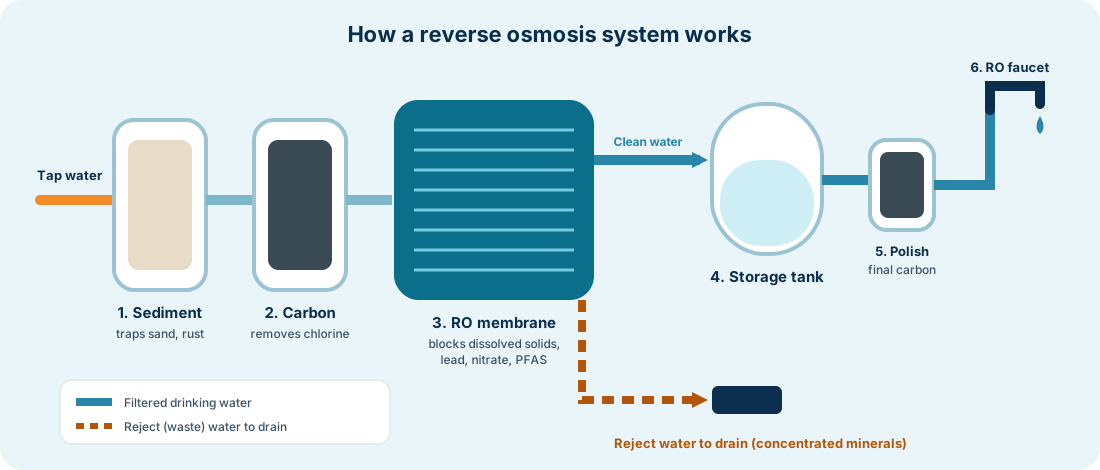
An under-sink RO system pushes water through a very fine membrane that blocks most dissolved minerals, including fluoride. It is the most practical whole-family solution for drinking and cooking water. Read our full reverse osmosis guide.
Methods That Do Not Remove Fluoride
- Boiling: fluoride stays behind and can become slightly more concentrated.
- Standard carbon filters: most pitcher, faucet and refrigerator filters remove very little fluoride.
- Water softeners: they remove hardness, not fluoride. See hard water vs soft water.
- Freezing: does not remove fluoride.
How Much Do Fluoride Filters Cost?
| Option | Typical cost |
|---|---|
| Under-sink reverse osmosis, installed | About $150 to $1,300 |
| Countertop RO (no plumbing) | Varies by brand |
| Activated alumina pitcher or countertop filter | Low upfront; frequent cartridge changes |
| Countertop distiller | Varies; plus electricity |
RO cost range from This Old House (2026). See our types of water filters guide for more options.

How to Choose a Fluoride Filter
- Check your fluoride level in your water report or with a lab test.
- Look for a tested fluoride claim. For RO systems, check the NSF/ANSI 58 listing; for other filters, look for independent lab results.
- Decide how much water you need. A family is usually best served by under-sink RO.
- Plan for maintenance. Fluoride media and RO membranes only work if replaced on schedule.
Frequently Asked Questions
What is the best way to remove fluoride from water?
Reverse osmosis is the most practical and effective home method; it removes most fluoride at a kitchen tap. Activated alumina filters and distillation also work. Check the product’s certification listing for its tested fluoride reduction.
Do Brita or pitcher filters remove fluoride?
Most standard carbon pitcher filters do not remove much fluoride. A few specialty pitchers use activated alumina or other media for fluoride; check for a specific, independently tested fluoride claim.
Does boiling water remove fluoride?
No. Boiling does not remove fluoride. As water evaporates, the fluoride stays behind, so boiling can slightly increase the concentration.
Does a water softener remove fluoride?
No. Water softeners remove hardness minerals like calcium and magnesium, not fluoride. You need reverse osmosis, activated alumina or distillation.
How do I know how much fluoride is in my water?
City water customers can check their annual water quality report or ask their utility. Private well owners should test their water, because natural fluoride levels in wells vary a lot.
The Bottom Line
To remove fluoride from water, use reverse osmosis, activated alumina or distillation. Reverse osmosis is the easiest option for most families. Boiling, regular pitcher filters and water softeners will not do the job. Check your water report first so you know how much fluoride you are dealing with.
Sources: EPA: Drinking water regulations and contaminants; CDC: Community water fluoridation; This Old House: Reverse osmosis system cost.