Cloudy Well Water: 6 Causes and How to Fix Each One
Last updated: November 6, 2026 · Sources: U.S. EPA, USGS, university Extension guidance
Cloudy well water is usually caused by tiny air bubbles, which clear from the bottom of the glass up and are harmless. If particles settle to the bottom instead, the cause is sediment such as sand, silt or clay, often after heavy rain or a well problem. Water that turns orange or black is iron or manganese, and fizzy, spurting water can mean methane gas. If your water turns cloudy after heavy rain or flooding, test it for bacteria.
Milky, murky or hazy water from your well can mean anything from a harmless pressure quirk to a problem with the well itself. A simple glass test at your kitchen counter will usually tell you which one you are dealing with. This guide covers the six most common causes of cloudy well water and how to fix each one.
Cloudy well water at a glance
- Clears from the bottom up: air bubbles, usually harmless
- Particles settle out: sediment; add a sediment filter and check the well
- Turns orange or black: iron or manganese
- Fizzy, sputtering taps: possible methane; get it tested
- After rain or flooding: test for coliform bacteria
Start With the Glass Test
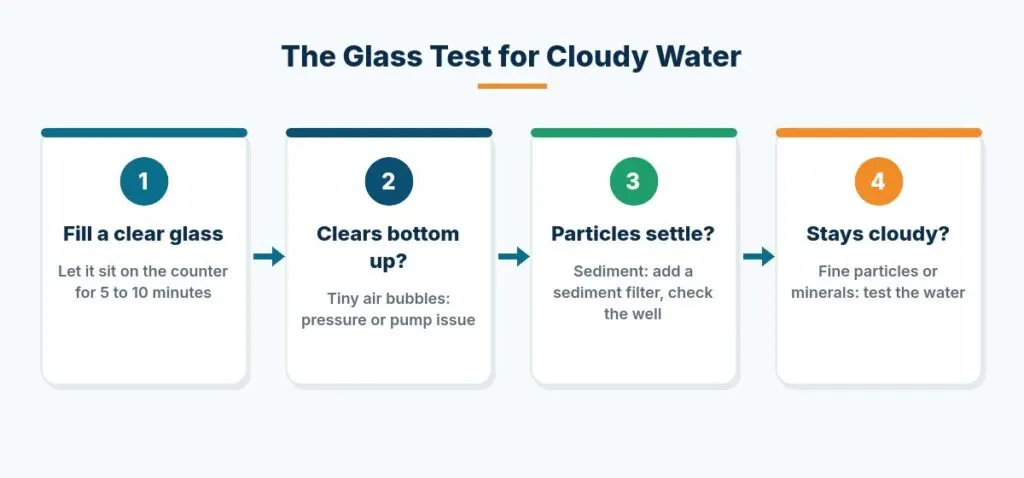
Fill a clear glass with cold water from the kitchen tap and set it on the counter. Watch it for 5 to 10 minutes:
- It clears from the bottom up within a minute or two: air bubbles.
- Particles sink and collect at the bottom: sediment.
- It slowly turns yellow, orange or brown: iron. Black specks or a gray tint: manganese.
- It stays evenly cloudy: very fine clay, minerals or other dissolved substances. Test the water.
1. Air Bubbles
This is the most common and least worrying cause. Water under pressure holds more dissolved air. When it leaves the faucet, the pressure drops and the air comes out as tiny bubbles that make the water look milky. Cold groundwater warming up in your pipes can do the same thing.
When to look closer: if you also hear sputtering faucets or the pump cycles on and off often, the pressure tank may have lost its air charge, a pipe may be leaking air on the suction side, or the water level in the well may be dropping close to the pump. A well contractor can check the tank, pump and water level.
2. Sediment: Sand, Silt or Clay
If particles settle to the bottom of the glass, sediment is getting into your water. Common reasons include:
- Heavy rain or snowmelt stirring up the aquifer
- A pump set too close to the bottom of the well
- A falling water table during drought
- A damaged or worn well screen or casing
- A newly drilled well that is still clearing
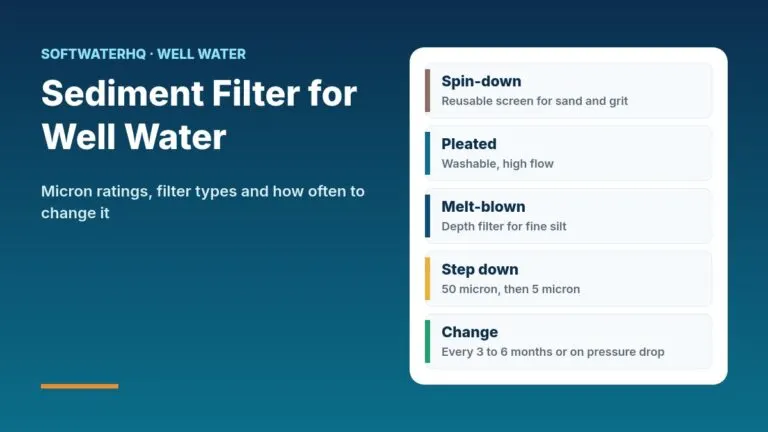
Fix: install a whole-house sediment filter for well water. If the sediment is sudden or heavy, especially sand, have the well inspected. Sand can quickly wear out your pump and appliances.
3. Iron and Manganese
Water that comes out cloudy and then turns yellow, orange or rust-colored contains iron that is reacting with air. Black or gray particles usually mean manganese. Both leave stains on sinks, toilets and laundry.
Fix: test for iron and manganese, then choose treatment based on the levels. See our guide to removing iron from well water.
4. Hardness Minerals
Very hard water can look slightly cloudy, especially after it is heated, because calcium carbonate comes out of the water as fine white particles. You may also see white scale on fixtures and spots on dishes.
Fix: a water softener sized for well water. Learn more in what is hard water.
5. Methane Gas
In some areas, natural gas (methane) can dissolve in groundwater. It makes water look cloudy or fizzy, and faucets may sputter or spit. Methane in water is not considered toxic to drink, but the gas can build up in enclosed spaces like well pits and basements, where it can become a fire or explosion hazard.
Fix: if you suspect methane, have your water tested by a certified lab and talk to your state or local health department. Treatment usually involves properly venting the well and, if needed, aerating the water.
6. Bacteria or Surface Water
If your water turns cloudy after heavy rain or flooding, surface water may be getting into the well, and it can carry bacteria. This kind of cloudiness may also come with a change in taste or smell.
Fix: use bottled water for drinking and test for coliform bacteria. If the test is positive, inspect the wellhead, fix any damage and shock chlorinate the well.
Water run-off from rainfall or snow-melt can contaminate private wells by washing microorganisms into the well system or seeping underground.
Is Cloudy Well Water Safe to Drink?
Water that is cloudy only because of air bubbles is safe. Cloudiness from sediment, iron or hardness is mainly a nuisance, but particles can shield bacteria, and you cannot tell what is in the water just by looking. If the cloudiness is new, does not clear in the glass test, or showed up after rain or flooding, use bottled water and test your well. Our well water testing guide explains what to test.
What to Do If Your Well Water Turns Cloudy Suddenly
- Do the glass test to see whether it is air, sediment or something else.
- If it is not just air, switch to bottled water for drinking for now.
- Check the wellhead for damage, standing water or a loose cap.
- Test for bacteria, and for iron, manganese and turbidity.
- Call a licensed well contractor if you see sand, the pump short-cycles, or the problem continues.
Frequently Asked Questions
Why is my well water cloudy all of a sudden?
Sudden cloudiness is often caused by air in the lines after work on the plumbing, sediment stirred up by heavy rain, a dropping water level, or a problem with the pump or pressure tank. If it happened after rain or flooding, test for bacteria.
Is cloudy well water safe to drink?
If it clears from the bottom up within a minute or two, it is just air and is safe. Cloudiness that does not clear could be sediment, minerals or contamination, so use bottled water until you have tested it.
How do I get rid of cloudy well water?
Find the cause first. Air bubbles may need a pressure tank or pump check, sediment needs a sediment filter, iron needs an iron filter, and hard water needs a softener. Bacteria require fixing the well and disinfecting it.
Why is my well water cloudy after it rains?
Heavy rain can stir up fine sediment in the aquifer or let surface water seep into a well that is not sealed well. Both can make water cloudy, and surface water can carry bacteria, so test the water.
Can a water filter fix cloudy well water?
A sediment filter fixes cloudiness from sand, silt and some clay. It will not fix air bubbles, dissolved iron, hardness or bacteria, which need other solutions.
Sources: EPA: Private Drinking Water Wells; USGS: Turbidity and Water.