Sediment Filter for Well Water: Micron Ratings, Types and Sizing
Last updated: November 6, 2026 · Sources: U.S. EPA, NSF, university Extension guidance
A sediment filter for well water traps sand, silt, clay and rust before they reach your faucets, appliances and treatment equipment. For most wells, a two-stage setup works best: a coarse filter (around 50 micron, or a spin-down screen for sand) followed by a fine 5-micron cartridge. Install it right after the pressure tank, and replace cartridges every 3 to 6 months or when water pressure drops.
Almost every private well can benefit from a sediment filter. It is the cheapest piece of well water treatment and it protects everything else: softeners, iron filters, UV lamps and the valves in your appliances. This guide explains which type and micron rating to choose, where to install it and how to keep it from clogging.
Sediment filters at a glance
- Removes: sand, silt, clay, rust flakes and other particles
- Does not remove: dissolved iron, hardness, bacteria, odors or chemicals
- Best setup: coarse filter or spin-down, then 5 micron
- Location: after the pressure tank, before all other treatment
- Change: every 3 to 6 months, or at about a 10 psi pressure drop
What a Sediment Filter Does (and Does Not Do)
A sediment filter is a physical screen. Water passes through it, and particles bigger than its pore size get caught. That is all it does. It will not soften water, remove dissolved iron, kill bacteria or take out chemicals like nitrate or PFAS. Think of it as protection for your plumbing and for the treatment stages that come after it, not as a drinking water filter.
It does make a real difference, though. Sand can wear out pump parts, toilet fill valves, washing machine valves and softener control valves. Fine particles also shield bacteria from UV light, so a UV system needs a sediment filter in front of it to work.
Signs You Need a Sediment Filter
- Gritty or sandy feel in the water, or sand in the toilet tank
- Clogged faucet aerators and shower heads
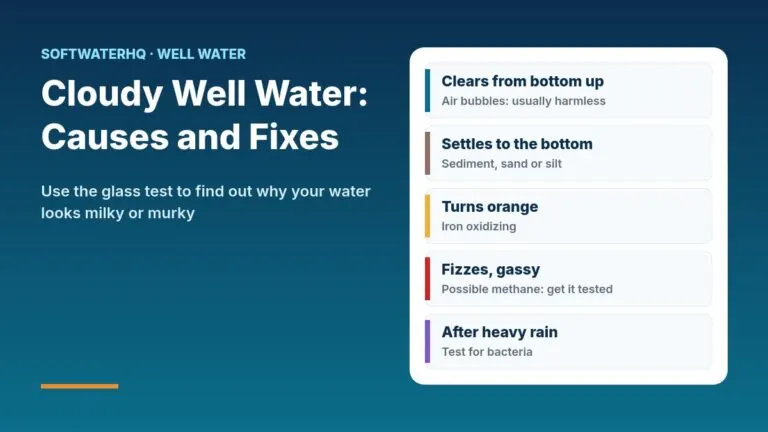
- Cloudy or murky water that clears as particles settle (see cloudy well water)
- Brown or orange flakes from rust
- Appliance valves that fail or drip early
- You are adding a softener, iron filter or UV system
Types of Sediment Filters
| Type | Best for | Pros | Cons |
|---|---|---|---|
| Spin-down | Sand and grit | Reusable screen, flush valve, see-through bowl | Does not catch fine silt |
| Pleated | Larger particles, high flow | Washable, large surface area, low pressure drop | Less effective on very fine silt |
| String-wound | General sediment | Inexpensive, catches particles through its depth | Disposable |
| Melt-blown (spun polypropylene) | Fine silt and clay | Graded density holds a lot of dirt, low cost | Disposable; clogs faster with heavy sediment |
| Backwashing sediment filter | Heavy, ongoing sediment | Cleans itself automatically, no cartridges | Higher cost, needs drain and enough pump flow |
Which Micron Rating Should You Choose?
A micron is one-millionth of a meter. The smaller the micron rating, the finer the particles the filter catches, but also the faster it clogs and the more water pressure it costs you.

- Sand and grit: a spin-down screen (often 100 micron or coarser) first.
- General whole-house protection: 20 to 50 micron.
- Before a UV purifier: 5 micron is the usual recommendation.
- Very fine particles: 1 micron, but only after a coarser pre-filter.
Use a step-down setup
Instead of one very fine filter that clogs every few weeks, use two housings in a row: for example, 50 micron followed by 5 micron. The first catches the big particles so the second can focus on the fine ones. Both last longer, and you get better filtering with less pressure loss.
Sizing Your Sediment Filter
Filter housings come in standard sizes. For a whole home on well water, a 4.5 × 20-inch “big” housing with 1-inch ports is a common choice because it holds more dirt and keeps water pressure up. Smaller 2.5 × 10-inch housings are fine for a single tap but clog quickly on a whole house. Make sure the filter’s rated flow (in gallons per minute) is at least your home’s peak demand.
Where to Install a Sediment Filter
- After the well’s pressure tank, so the pressure switch reads true well pressure.
- Before the water softener, iron filter, UV and any other treatment.
- With shut-off valves on both sides and, ideally, a bypass so you can change cartridges without shutting off the house.
- With pressure gauges before and after the filter, so you can see when it starts to clog.
See where it fits in the full setup in our well water filtration system guide.
How Often to Change a Sediment Filter
- Cartridges: every 3 to 6 months for most wells; sooner with heavy sediment.
- Pressure drop: replace when the difference between the gauges reaches about 10 psi, or when you notice weak pressure.
- Spin-down filters: open the flush valve every week or two, or whenever you see sediment building up in the bowl.
- Housings: clean the housing and replace the O-ring if it is cracked when you change cartridges.
Troubleshooting
The filter clogs in a few weeks
Add a coarser pre-filter or a spin-down in front of it, or switch to a backwashing sediment filter. Sudden, heavy sediment can also mean a well problem, such as a pump set too close to the bottom, a failing well screen or a falling water level. A well contractor can check it.
The cartridge turns orange or black
That is usually iron or manganese that has oxidized into particles. The sediment filter is catching some of it, but you likely need a dedicated iron filter. See how to remove iron from well water.
Water pressure dropped after installing a filter
The micron rating may be too fine, the housing too small, or the cartridge already loaded. Use a step-down setup and a larger housing.
Frequently Asked Questions
What micron sediment filter is best for well water?
For most wells, use a two-stage setup: a coarse filter around 50 micron (or a spin-down for sand) followed by a 5-micron cartridge. Use 5 micron in front of a UV purifier.
Do I need a sediment filter for well water?
Most wells benefit from one. It is inexpensive and protects your plumbing, appliances and any softener, iron filter or UV system from sand and silt.
Does a sediment filter remove iron?
Only iron that has already turned into rust particles. Dissolved (clear-water) iron passes through. For that, you need an oxidizing iron filter or, for small amounts, a water softener.
How often should I change my whole house sediment filter?
Every 3 to 6 months for most homes, or when the pressure drop across the filter reaches about 10 psi. Wells with heavy sediment may need changes every month or a self-cleaning backwashing filter.
Should a sediment filter go before or after the pressure tank?
Usually after the pressure tank. That keeps the pump’s pressure switch reading accurately and lets you change the filter without affecting the pump. A spin-down filter for heavy sand is sometimes added before the tank to protect it.
Sources: EPA: Private Drinking Water Wells; NSF: Standards for Water Treatment Systems.